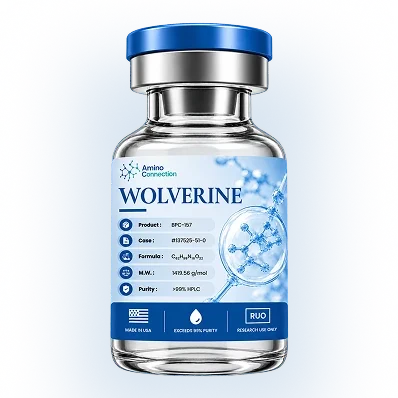
Wolverine
$129.00
14 mg
A research peptide combination bringing together BPC-157, TB-4 (Thymosin Beta-4), and KPV.

Short-chain amino acid compound
Growth hormone-releasing hormone analogue
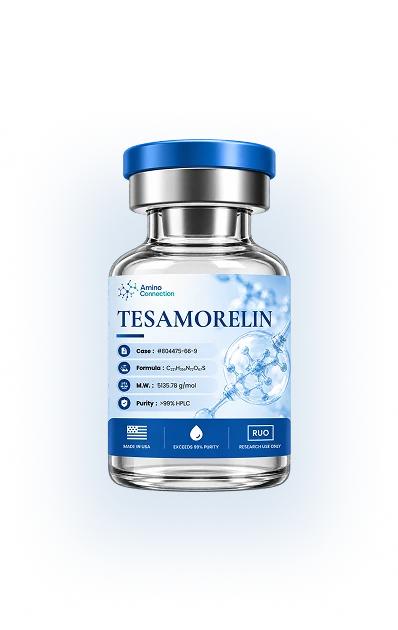
TESAMORELIN is a short-chain amino acid supplied for lawful, non-clinical laboratory research. This material may be used in analytical, biochemical, formulation, or reference research settings by qualified account holders.
Tesamorelin is a synthetic analogue of growth hormone-releasing hormone (GHRH). It consists of the 44-amino-acid sequence of human GHRH with an N-terminal modification that increases resistance to enzymatic degradation. It has been the subject of laboratory and preclinical research examining GHRH receptor signaling and downstream growth hormone pathways.
Researchers study Tesamorelin for its selective interaction with the GHRH receptor on pituitary somatotroph cells.
Because Tesamorelin acts upstream at the GHRH receptor rather than as exogenous growth hormone, it provides researchers with a tool to examine physiological stimulation of the growth hormone axis and related endocrine pathways.
Amino Connection supplies Tesamorelin as a high-purity lyophilized research material intended solely for controlled laboratory investigation. It is not intended for human or veterinary use.
| Product name | TESAMORELIN |
|---|---|
| CAS number | #804475-66-9 |
| Formula | C221H366N72O67S |
| Molecular weight | 5135.78 g/mol |
| Purity | >99.0% |
| Available size | 10 mg, 20 mg |
| Storage conditions | Keep tightly closed and store at 2–8°C for short-term storage; for long-term storage, freeze at approximately −20°C. |
| Intended use | Research use only |
| Availability | Private account holder only |
Long-term storage: For optimal stability, store lyophilized peptides in a freezer at approximately −20°C (−4°F) and protect from direct light.
Refrigerated storage: Short-term storage at 2 to 8°C (36 to 46°F) may be appropriate depending on the specific product. Always refer to the product label or lot-specific documentation for storage requirements.
When stored properly in their original lyophilized powder form, peptides may remain suitable for research use for approximately 18 to 24 months.
After reconstitution, peptides should be stored under refrigeration at 2 to 8°C (36 to 46°F) and used within approximately 30 to 45 days, unless otherwise specified in the product documentation.
Avoid prolonged exposure to room temperature, direct light, and unnecessary temperature fluctuations to help maintain product stability.
Amino Connection takes care in preparing research products for shipment and uses appropriate cold-packaging methods when applicable to help protect products during transit.
Orders are carefully prepared and packaged for shipment from our Carlsbad, California fulfillment location. Appropriate temperature-conscious packaging may be used when necessary based on the product and shipping conditions.
Orders are typically processed as quickly as possible during normal business days. Once your order ships, tracking information will be sent to the email address provided at checkout.
Delivery times may vary based on destination, carrier availability, weather, holidays, and other circumstances outside of our control. Please review your shipping information carefully before submitting your order, as customers are responsible for providing a complete and accurate delivery address.
Domestic orders ship at a flat rate of $10. Free standard shipping on domestic orders over $500.
For shipping questions or assistance with an existing order, contact support@aminoconnection.com.
Due to the nature of our research products and quality-control requirements, Amino Connection does not accept product returns.
If your order arrives damaged, incomplete, or contains an incorrect product, please contact our team as soon as possible so we can review the issue and determine the appropriate resolution.
For questions or concerns regarding your order, please contact support@aminoconnection.com.
A research peptide combination bringing together BPC-157, TB-4 (Thymosin Beta-4), and KPV.
A synthetic heptapeptide studied for neurotrophic signaling and gene expression modulation.
A synthetic peptide sequence derived from human growth hormone, studied in lipid metabolism research.
Apply for a wholesale account to access preferred pricing for higher-volume and ongoing research orders.
Join the Amino Connection Affiliate Program and earn up to 20% commission on qualifying purchases you refer.